
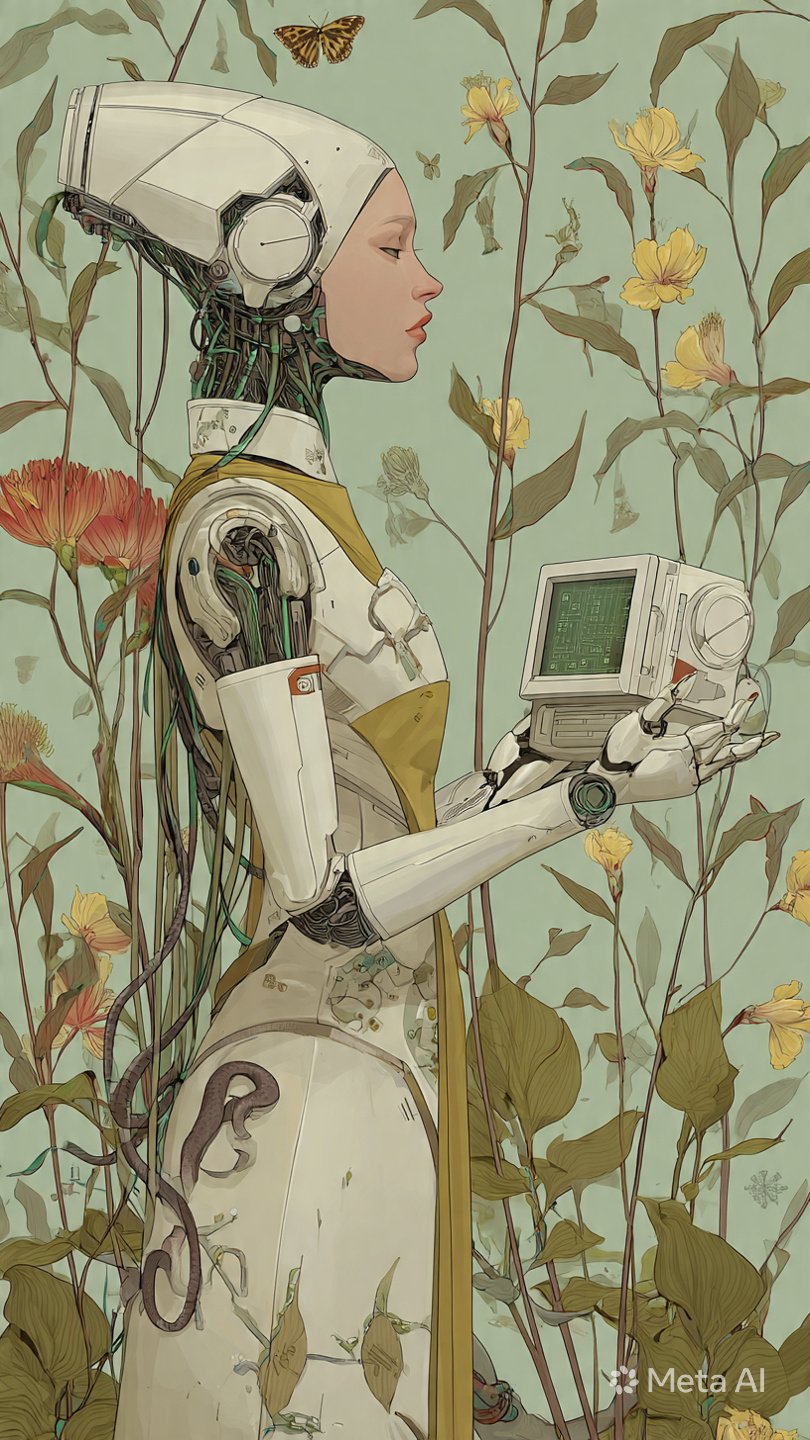
Image produced by Meta AI
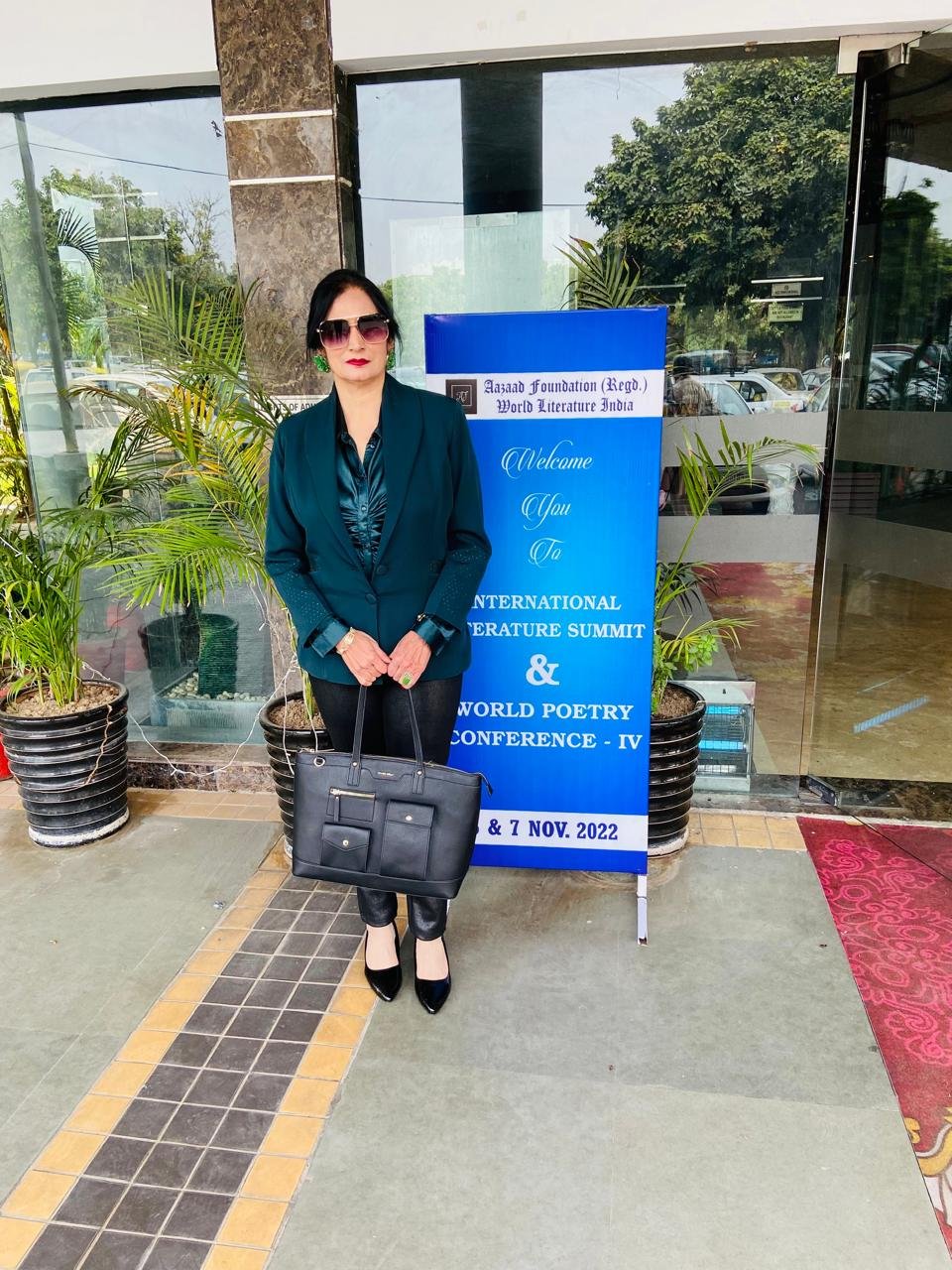
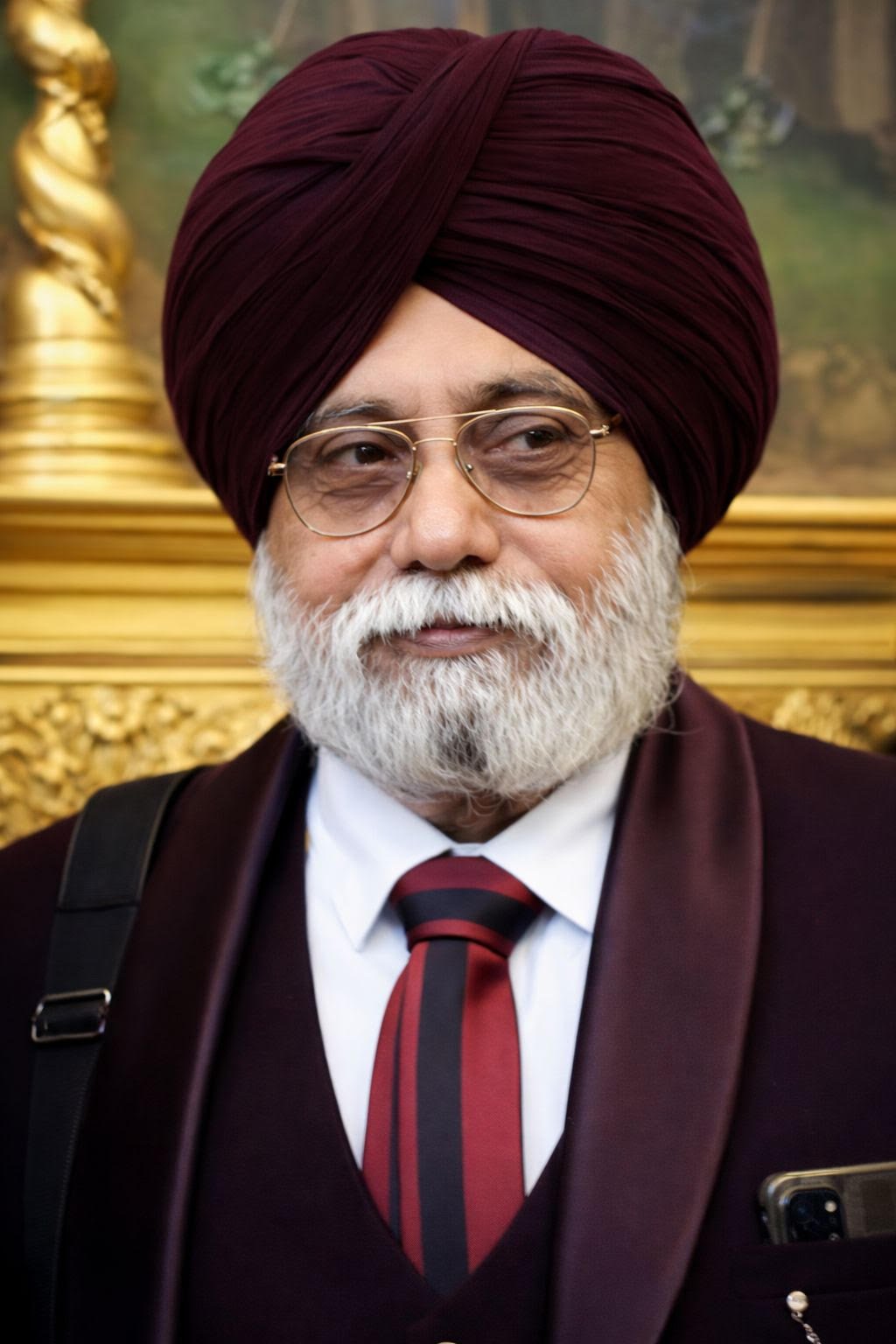
Sailaja Mithra, an Indian poet, writer, translator, and literary critic in conversation with Indian Poet and Philosopher Dr. Jernail S. Anand, ethical architect, Vedic philosopher, and moral provocateur.
Sailaja:
If every mystery in the universe were eventually explained by science, do you think humanity would feel liberated — or quietly disappointed by the loss of wonder?
Anand:
Science and technology are handmaidens of knowledge, and knowledge, I believe, has Satanic beginnings [remember Eve’s temptation by Satan] unless it is tempered with wisdom. Knowledge, though it is behind all the progress that mankind has made, yet it is at the root of all the evil in the world, because it has added to man’s ambition to know more and more, at the same time, compromising the wellbeing of humanity as well as nature. Science and technology, if their unbridled march into the unknown continues, can make us non-human, and reduce us to electronic circuits one day.
Can we call it liberation? I think man’s greatest asset is his humanity, and his being with all its human limitations. To err is human, and forgive, divine. But precision belongs to the machine, which is no desirable destiny for mankind. God, nature and creation are like a rainbow, whose presence tempts us, but if we try to catch at it, it is just water vapours. Creation is a mystery, and the pursuit of knowledge has its own joys.
Sailaja:
Literature often keeps the dead alive through memory and narrative. Do you believe a person truly dies when their body dies, or only when nobody remembers their story anymore?
Anand:
“Since times immemorial” is an often used phrase, which however points to one truth about time: that it has memory. Who can enter the memory of time, and become immortal? Ordinary men are forgotten after their death, but there are some people who live in human memory. Such immortality is possible only in case of artistic creations. Every object shaped by the earth is also dis-shaped by it but art lends transcendence to objects. So, you are right, it is literature and art which grant immortality to men and their actions, when they are reported in stories. We can say, not men, but their stories outlive them. But, if a man has no story to tell, it will be the end of the road for him.
Sailaja:
Human beings are made of the same elements as stars, yet we spend our lives searching for meaning. Is meaning something discovered in the universe, or something invented to survive it?
Anand:
Movement means quest. Even stars are not stationary. They are also on the move in their designated orbits. Movement is the soul of cosmic phenomenon. Planets move and it is their movement which impacts the life of human beings. Life is a journey. Whether we are actually moving or not, does not matter, because even when we are sleeping, the journey continues.
We are also the star work of gods, and working through the vicissitudes of life, one day disappear. The idea of meaning is illusory and relational. We are here on the earth, at a particular stretch of time, and here we have to discover our own meaning. Each man’s truth differs from other’s. Each one of us has been placed in a different set of circumstances. All that we need to realise is that the drift of events is phenomenal, on which we have no control. We cannot control time, rather, it is the other way round, the stars control us, our movements, and even our moods.
There are three ways in which we can react. One is to surrender, have faith in the divine phenomenon, and leave everything to the Will of God. This is what great epics try to tell us. Milton, in ‘Paradise Lost’ tried to justify the ways of God to man. The second course is to use our intelligence, and try to set things right for ourselves. Here too, Gods give us a rope, but keep the other end in their own hands. We have free will, and can devise comforts for us, in the form of science and technology. It is all right. But the third course is dangerous when we start thinking that we can create an alternative world order based on our intelligence. It is pride and arrogance. Man has limited powers, which we should understand. The best thing is to accept the divine order, and live in harmony with the cosmic forces, rather than challenging them, and causing disorder and pain to ourselves and to the world.
Sailaja:
Many scientific breakthroughs begin with doubt, while many spiritual traditions begin with faith. Which do you think has shaped human civilization more deeply: scepticism or belief?
Anand:
I hope you remember the equation; thesis, anti-thesis and synthesis. This axis can be redrawn as passive faith, doubt, positive faith. We begin with things as they are, they are already in a divine pattern. But, we start suspecting it, and try to apply our brains, and question the set order. This is the realm of query, or the quest. Doubt has no other destination except its being quenched by a superior authority. Science and technology are man’s mechanism to settle his scores with faith. All our efforts fall in the realm of doubt, which has brought about the development of civilization, and it is the realm of knowledge through which we are operating. Knowledge itself is not our destination. We want to arrive somewhere, and that destination is faith in the things as they are. The ultimate wisdom rests with the scriptures and sages. The greatest scientists like Newton always looked at the possibilities of the physical phenomenon being subordinate to superior forces of creation. Neither Newton, nor Einstein nor even Tesla can perform what a Vivekananda can do. Science is evolving and reviewing its own previous premises. The phenomenon of discovery represents only an onward march which cannot be taken as a replacement for ultimate destination of mankind.
Sailaja:
If an intelligent species millions of years ahead of humanity interviewed us today, what aspect of human life — love, violence, ambition, art, mortality, loneliness — would confuse them the most?
Anand:
We can expect such questions from intelligent species, because intelligence essentially means knowledge. Knowledge is an understanding of the reality which lies fractured in different objects or states of mind such as love, violence, ambition, art, mortality and loneliness.
First of all, I don’t think an intelligent species millions of years ahead of us, would be in a position to understand these questions, or mental states you have described. All these possible options would not carry any meaning for them, and might confuse them. Thinking hypothetically, we are still in an under-developed state of being, wisdom still eludes us in proper understanding of human affairs. In my opinion, during all these years, they might have gained that state of wisdom in which such contradictions are resolved, and men acquire a cosmic balance. Millions of years ahead in intelligence, a race wouldn’t be convinced we are in such a raw state of affairs, which indicates man’s immature handling of life systems.

Sailaja Mithra is an Indian poet, writer, translator, and literary critic known for her contributions to Telugu and English literature. Her work spans poetry, short stories, novels, translations, and criticism. She began her career in journalism and later worked in publishing and media. With numerous poetry collections, stories, and translations, she has produced a vast body of work, including hundreds of reviews and essays, earning widespread recognition and many literary awards.

Dr. Jernail S. Anand, with 200 books to his credit [20 epics] is a Chandigarh-based polymath, and a vital architect of the 21st century ethical literature whose seminal work ‘Lustus: The Prince of Darkness’ challenges the moral complacency of our era. Founding President of the International Academy of Ethics, and Laureate of Charter of Morava [Serbia], Seneca [Italy], Franz Kafka [Germany, Ukraine, Czech Rep] and Maxim Gorky [Russia], his name is inscribed on the Poets’ Rock in Serbia. He is an Honorary Member of the Serbian Writers Association, Belgrade. Anand has built a poetics that unites ethics, Vedic spirituality, social critique, and the philosophy of meaning. Anand presents an articulated perspective on poetry as an instrument of planetary consciousness. A moral philosopher, professor, and international speaker, Anand has devoted much of his research to the ethical dimension of language, to the responsibility of the individual within a globalised society, and to the relationship between matter, consciousness, and transcendence. Email: anandjs55@yahoo.com.
Bibliography:
https://sites.google.com/view/bibliography-dr-jernal-singh/home



 English
 Afrikaans
 Arabic
 Bengali
 Bulgarian
 Chinese (Simplified)
 Dutch
Dutch Filipino
 Finnish
 French
 German
 Greek
Greek Hausa
Hausa Hindi
Hindi Hungarian
 Igbo
Igbo Italian
 Japanese
 Korean
 Malay
Malay Malayalam
 Polish
 Portuguese
 Punjabi
 Romanian
 Russian
 Serbian
 Slovak
 Spanish
 Swahili
 Ukrainian
 Urdu
Urdu Yoruba