
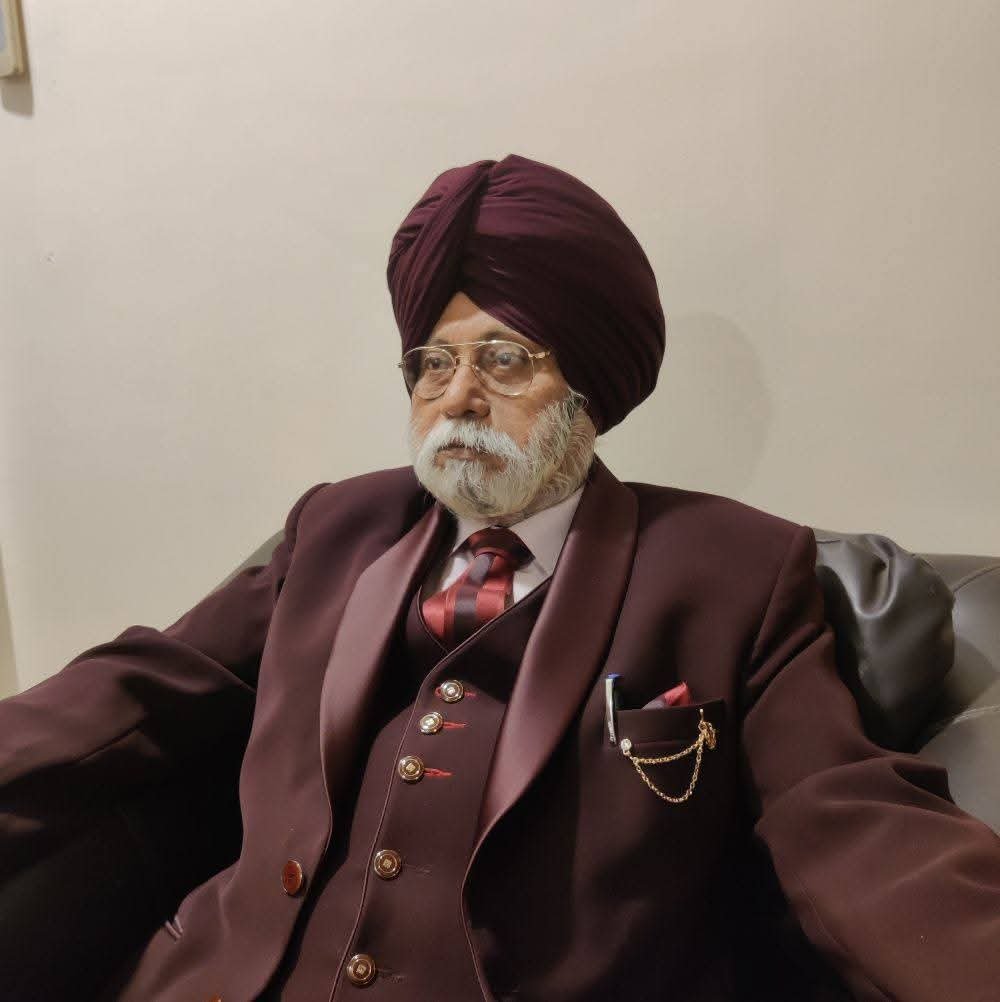
ITALIAN SCHOLAR MILENA RENZI IN CONVERSATION WITH DR JERNAIL S ANAND, THE TOP RANKING WORLD POET AND PHILOSOPHER.
[Dr Jernail S. Anand has authored more than 200 books, and is believed to be the pioneer of Epic Revival. President of the International Academy of Ethics, Dr. Anand has won the Charter of Morava, Seneca, Franz Kafka, Maxim Gorky and Mahatma Gandhi Awards. His name is inscribed on the Poets’ Rock in Serbia.]

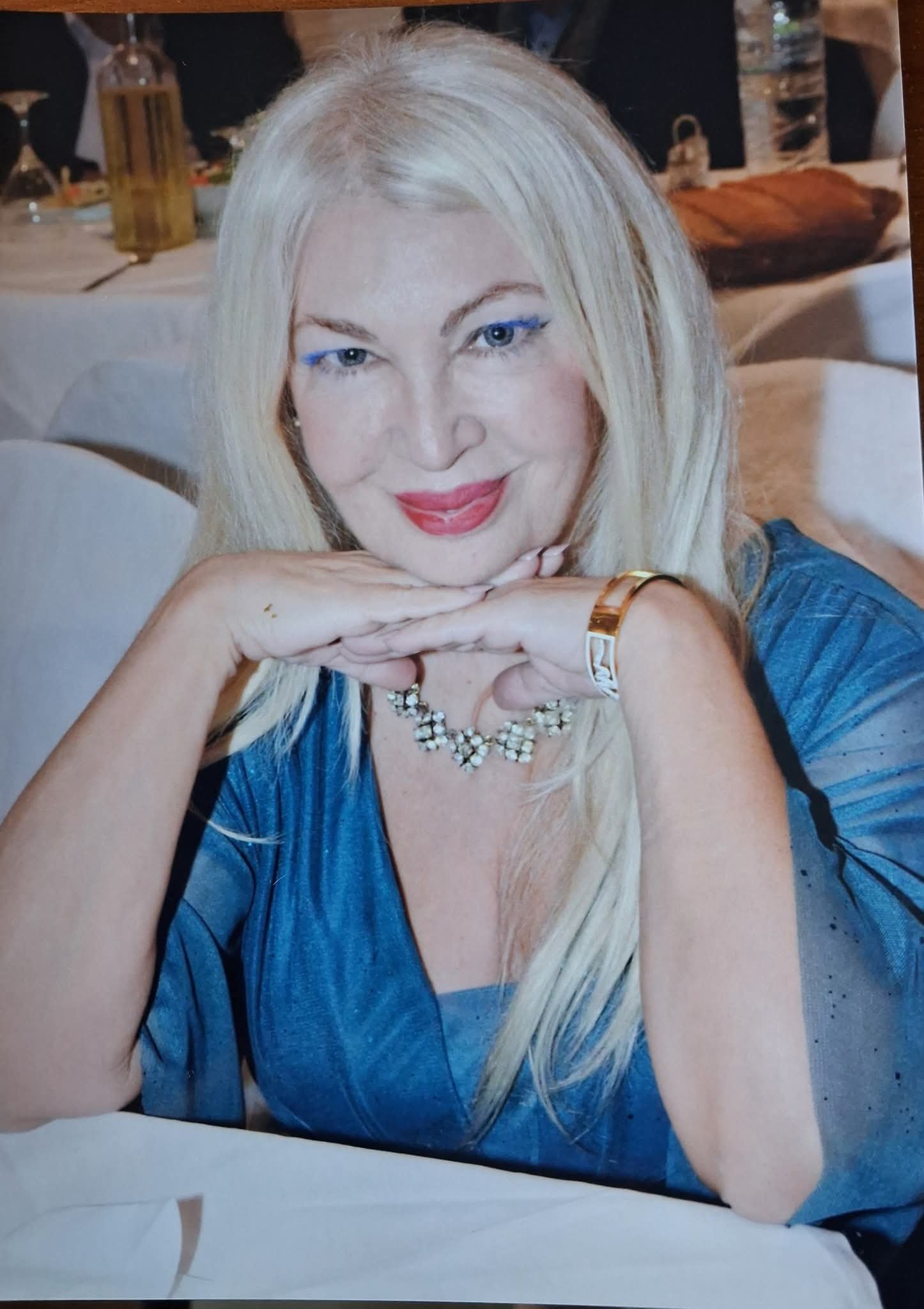
Dr. HR MILENA RENZI is an Italian writer, journalist, translator, cultural operator and theatre author and a Fellow of the International Academy of Ethics.
MILENA RENZI
How can literature become a bridge between wounded cultures and divided human beings?
It is very rare that people who are happy take to literary creation in all its seriousness. Literature is a part of the living culture of the people which gives expression not only to their joy but their pain as well. Essentially, literature deals with human pain and suffering. In fact, it is the most basic reaction, after tears, that a man gives, with an unconscious mind. Poetry, prose, fiction, epics – do not tell stories of happiness or joy. I sometimes wonder, if joy has any story-ed potential. Happiness can start boring after an initial kickup. The films which are based on comedies, or even in plays which are comic, the authors have to work hard, to sustain interest of the masses. In ordinary life, if you start telling a story of a family which is living happily, the listener will soon ask: then what happened? He expects it will take some turn for the worse. And we eagerly wait for the entry of an evil spirit, some devil, or a villain. Once he is in, we can be sure of having wonderful time. That is our real joy from literature.
In this way, literature primarily deals with human pain and suffering, and presents a dignified opening for wounded cultures and even for divided men, who are unable to understand themselves. Literature is, in fact, a diplomacy of words. We want balance and peace, and for this, only literature supplies the best words, which are more credible than history which is the architect of the wounds of humanity.
MILENA RENZI
What is the role of women writers today in defending peace, dignity and memory?
All the writers confront a grave existential crisis which turns more serious when it impacts human dignity. Peace is our birth right, and the Creator has provided in animals and birds, the archetypes of peaceful existence. The greatest threat to peace is human greed, which is born of disoriented knowledge. Women writers can defend peace only if they understand what constitutes peace. Peace is not the absence of war. Peace is a state of being in which we stop violating the essential harmony maintained by nature. As soon as we step on the soft toes of nature, it is hurt, and this rash act then wounds our own peace.
The idea of dignity too needs to be understood from the point of view of human duties. With duties is associated the idea of dignity. Women authors can highlight this twin responsibility. Men have been invested with a certain dignity, and they can live with grace only if they perform their duties well, which in spiritual parlance, is called ‘dharma’. Not only men, women too have to stick to their ‘dharma’ in the performance of the chores for which the cosmos has detailed them. And for this, they have to come to terms with the racial and ancestral archetypes which rest in our collective memory, and keep reminding us of our adequacies and inadequacies while we are performing in this life.
MILENA RENZI
Can art and words transform personal pain into a universal message of hope?
Art and words give a recognizable shape to human perception. Art has wings. It carries you on its wings and lands you in a world which disconnects you from your present reality. Art presents life in a new perspective. The brush and the pen impart a new persona to words and expressions. Poetry and Art say things few have said before. If while reading a poem or seeing a work of art, or even meeting a poet, you remain what you were, it means the art or the poem or the man lacked the transversional power of imagination. It was routine writing which wastes the readers’ time and of humanity as a whole.
There is only one way which the world knows how to relieve pain. It is to get back on the person who is the author of this pain. But an artist gets back on the world through his creations, and thus, gives vent to his angst. The poet knows the art of universalising his pain, so that everyone who reads his creations, or every visitor who looks at the art work, identifies with the immensity of poet’s experience. In this way, art offers relief to tense nerves of mankind, and helps in restoring equilibrium in the world.
MILENA RENZI
How can intercultural dialogue help us overcome fear, prejudice and spiritual loneliness?
Cultures are signifiers of identity, and signatures of distinctiveness. No two cultures are alike, though similarities cannot be ruled out. Culture is the assimilated texture of the style of living of a particular group of people, situated in a geographical location. However, when we come into contact with people from diverse cultures, and study their ethos, it helps us understand human value systems existing in far off places, and there are many indicators which coexist and resonate with one another. In fact, it leads to greater understanding as human beings, and becomes a catalyst of human empathy, which is the need of the hour. Things we do not know generate fear and prejudice, and land us in an unsavoury state of spiritual loneliness. Cultural exchanges and cultural dialogue across societies, groups, and nations, help in international understanding, and restore human equilibrium which remains strained due to several factors like fear and prejudice.
These are the days when people are getting highly sensitive towards their cultural identity, and it often leads to conflicts as well. It is highly paradoxical that on one hand, the world is becoming a global village, and on the other, enthusiasts of cultural identity conflict with the idea of a singular world culture. We need to negotiate this contention so that the idea of a universal culture and the cultural identity could co-exist and enjoy a harmonious get-together.
MILENA RENZI
What does it mean, in our time, to write not only for beauty, but also for humanity?
Literature is expected to provide aesthetic pleasure. The pleasure principle is very strong when we evaluate a work of literary writing. We had a school of literary writers who believed in Art for Art’s Sake. These people were argued out by poets and scholars who believed that beauty is truth no doubt, but truth cannot exist in isolation. Truth has to resonate with human life. Extending the same logic, beauty which appeals to the eye, or even to the ears [music, poetry] serves a narrow literary purpose, of giving pleasure, which could have been accepted, if art and literature had been a private enterprise. When we write poetry, it remains half-realised if it is not read and enjoyed by the readers. The joy it creates, elevates them, but this is not enough. It must uplift the consciousness of the readers, into higher states of existence. Horace, a Roman lyrical poet, believes that the best poetry combines pleasure with instruction, aiming to both delight the reader and improve them morally or intellectually.
I believe that Literature is a parallel movement of history and it must extend beyond the concepts of beauty and personal joy. The idea of art and literature limiting itself only to aesthetic pleasure or expression of beauty appears to be a flawed perception which limits the reformative and imaginative potential of literary creation.
BIO OF DR JERNAIL S ANAND
An India poet and philosopher hailing from Chandigarh, Dr. Jernail S. Anand, with 200 books [18 epics] to his credit, is a formidable presence in the contemporary world literature, a polymath, and a vital architect of the 21st century ethical literature whose seminal work ‘Lustus: The Prince of Darkness’ challenges the moral complacency of our era. Founding President of the International Academy of Ethics, and Laureate of Charter of Morava [Serbia], Seneca [Italy], Franz Kafka [Germany, Ukraine, Czech Rep], Maxim Gorky [Russia] Soka Ikeda [Japan] and Mahankavi Bharathi [India] awards, his name is inscribed on the Poets’ Rock in Serbia. He is an Honorary Member of the Serbian Writers Association, Belgrade, a Member of the Honorary International Boule and Honorary Academic Senator of International Academy of Rome, and an Academic Member of the Academy of Arts and Philosophical Sciences, Bari [Italy]. Anand has built a poetics that unites ethics, Vedic spirituality, social critique, and the philosophy of meaning. Anand presents an articulated perspective on poetry as an instrument of planetary consciousness. A moral philosopher, professor, and international speaker, Anand has devoted much of his research to the ethical dimension of language, to the responsibility of the individual within a globalised society, and to the relationship between matter, consciousness, and transcendence. Email: anandjs55@yahoo.com.
For bibliography and other details: ethicsacademy.co.in
MILENA RENZI
Short bio – Milena Renzi
Dr.HC Milena Renzi is an Italian writer, journalist, translator, cultural operator and theatre author. A freelance writer since 1990, she has worked as a correspondent from India and the Middle East. She is the author of sixteen novels and over two hundred articles published in Italian and international media. Her work focuses on human rights, women’s dignity, intercultural dialogue, peace and culture as civil growth. In 2026, she received the honorary title “Honorary Great Contemporary Writer”, the Award of Fellowship from the International Academy of Ethics, India, and was appointed Ambassador of Peace for RRM3.


 English
 Afrikaans
 Arabic
 Bengali
 Bulgarian
 Chinese (Simplified)
 Dutch
Dutch Filipino
 Finnish
 French
 German
 Greek
Greek Hausa
Hausa Hindi
Hindi Hungarian
 Igbo
Igbo Italian
 Japanese
 Korean
 Malay
Malay Malayalam
 Polish
 Portuguese
 Punjabi
 Romanian
 Russian
 Serbian
 Slovak
 Spanish
 Swahili
 Ukrainian
 Urdu
Urdu Yoruba