
Introduction
Words are not neutral; they are indicators of the way a society thinks. For a century, ‘non-violence’ has been the moral anchor of civil resistance. But language evolves as life does. The word itself carries a contradiction: it centres the very thing it seeks to negate — violence. If we want a healthy thinking society, we must move from non-violence to a positive, creative frame. I propose: Force without Force.
The Negation Problem
‘Non-violence’ defines itself by what it is not. As per cognitive sciences, the brain processes the root word before the prefix. Say “non-toxic” and “toxic” flashes first. Say “non-violent” and “violent” enters the room. The frame forces us to measure every protest, every struggle, against violence. It cannot be a happy experience when we are thinking of a peaceful way of expressing our dissent.
Gandhi used an alternative word: 'Ahimsa' Yet ahimsa too is 'a-himsa', a negative of 'hinsa'. Sanskrit gave it 2000 years of positive cultural weight — reverence for life, compassion, discipline. But for a generation that does not live inside that tradition, ahimsa repeats the same negation. We still hear “himsa”, and then go over to its opposite: Ahinsa. And the contradiction persists.
Why “Love” Enters the Debate
We want a better word, a positive expression for this much need, much hyped word. When we hate violence, why use this word in our everyday exchange. Why not use the word ‘Love’? Non-violence says, “I will not harm.” Love says, “I will care.” Gandhi himself called ahimsa “the law of love.” Martin Luther King Jr. named it “the most durable power in the world.” But love is not emotional sentiment. It is rigorous, demanding, and disruptive. It sets boundaries, tells truth, resists injustice, and still refuses to dehumanize the opponent. Gandhi often says: hate the evil, not the evil-doer. Extending this logic along the lines I suggest, he is saying, love the evil-doer, and try to correct him, and if you want to eliminate something, it is evil from his mind.
The modern youth believes in ‘chill it’. The idea of Non-violence, with all its intimations of a bloody scene, is as chilling as violence itself. Their activism speaks of “leading with love,” “radical love,” “community care.” They are demanding a strategy that does not reproduce the violence it opposes.
Peaceful Struggle for Rights
How to describe a “non-violent protest”? If we want to remove the word ‘violence’ from where, because ultimately we are trying to convey the idea of a peaceful protest, why not use new imagery: Fighting the battle with Love and Peace. Peaceful struggle for rights. This keeps the battle. It honors that there is conflict — for climate, for dignity, for freedom. But it changes the weapons.
This is not passivity. The Salt March, the Dandi struggle, the civil rights sit-ins — all were battles. They were forceful. They shifted empires. The difference was the kind of force: not kinetic, not coercive, but moral, social, gravitational. It pulled conscience instead of pushing bodies.
Force without Force: The Philosophical Shift
The next evolution in language is to name that power directly: Force without Force.
It is a paradox. Satyagraha, “soul-force,” was Gandhi’s version. Today we see it in data strikes, global boycotts, meme warfare, digital sit-ins, and art that cannot be censored.
“Nonviolent” asks: Did you avoid harm?
“Force without force” asks: Did you move the world without breaking it? One is about restraint. The other is about creative power. That is the shift a healthy thinking society requires.
Will “Non-violent” Die Out?
Yes — when violence itself goes out of use. “Non-violence” exists only because violence exists. It is a word that rides on the back of what it negates. Make violence obsolete in culture, politics, and language, and “non-violence” will retire by itself.
Until then, our job is to demote the expression “non-violent” from the centre of our ethics and promote affirmative frames: Love, Peace, Soul-Force, Force without Force. We can use “nonviolent” for legal or historical precision. But we should use “Force without Force” to shape our thought, our culture, and our future.
Life After Gandhi
Gandhi was a great philosopher, but philosophy did not stop with him. He called his life “experiments with truth.” Experiments are meant to be continued, tested, and outgrown. To freeze Gandhi is to betray him. He burned his own writings when his views changed. He demanded that we use reason, not worship.
Yet many scholars act as if evolution stopped in 1948. They repeat “non-violence” at seminars while the world faces climate collapse, algorithmic control, and digital power that no Viceroy’s office represents. Gandhi dealt with empire and print. We deal with code and carbon.
To honor the ancestors is to outgrow them. Philosophy’s duty is to keep pace with life. Gen Z is already writing the next chapter. They are not waiting for peer review. They are living the upgrade.
Conclusion: The New Vocabulary
A healthy society imagines the world it wants, not just the world it opposes. “Non-violence” fails that test. “Force without Force” passes.
It keeps the battle. It drops the violence. It names the power.
From Non Violence to Force without Force — this is not semantics. This is strategy. This is evolution. And philosophy, if it is alive, must evolve. The word we use becomes the world we build. Let us choose words that create.
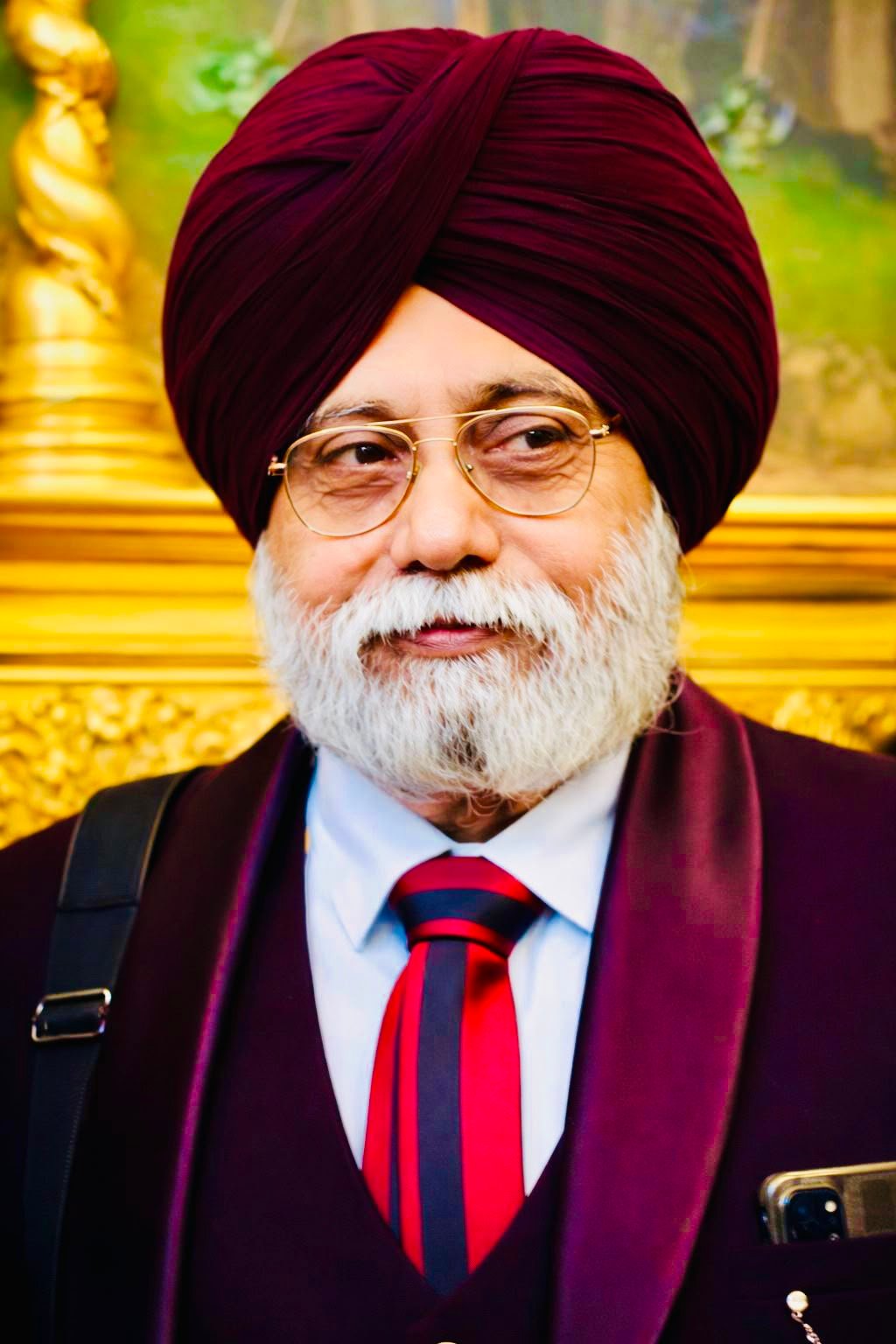
DR JERNAIL S ANAND
Dr. Jernail S. Anand, with 210 books to his credit [20 epics] is a Chandigarh-based polymath, and a vital architect of the 21st century ethical literature whose seminal work ‘Lustus: The Prince of Darkness’ challenges the moral complacency of our era. Founding President of the International Academy of Ethics, and Laureate of Charter of Morava [Serbia], Seneca [Italy], Franz Kafka [Germany, Ukraine, Czech Rep] and Maxim Gorky [Russia], his name is inscribed on the Poets’ Rock in Serbia. He is an Honorary Member of the Serbian Writers Association, Belgrade. Anand has built a poetics that unites ethics, Vedic spirituality, social critique, and the philosophy of meaning. Anand presents an articulated perspective on poetry as an instrument of planetary consciousness. A moral philosopher, professor, and international speaker, Anand has devoted much of his research to the ethical dimension of language, to the responsibility of the individual within a globalised society, and to the relationship between matter, consciousness, and transcendence. Email: anandjs55@yahoo.com.
Bibliography:
https://sites.google.com/view/bibliography-dr-jernal-singh/home






 English
 Afrikaans
 Arabic
 Bengali
 Bulgarian
 Chinese (Simplified)
 Dutch
Dutch Filipino
 Finnish
 French
 German
 Greek
Greek Hausa
Hausa Hindi
Hindi Hungarian
 Igbo
Igbo Italian
 Japanese
 Korean
 Malay
Malay Malayalam
 Polish
 Portuguese
 Punjabi
 Romanian
 Russian
 Serbian
 Slovak
 Spanish
 Swahili
 Ukrainian
 Urdu
Urdu Yoruba