
The edge of the platform at St Pancras at seven in the morning smells of damp concrete, ozone, and cheap paper-cup tea. Boarding the train bound toward the school district puts you alongside a regular crew of early Londoners, all moving together in a quiet, familiar cadence.
Nobody jostles on this train. It isn’t out of typical city coldness; it relies on a simple, unspoken courtesy. Everyone standing under the platform lights shares a brief, quiet window of calm before the workday hits.
Over months of managing operations at a school, you get used to watching how systems work—how people move through corridors, how crowds flow, and how order holds together without anyone shouting. On the platform, you see that same logic. People spread out along the yellow line naturally, leaving space without thinking about it. When the train pulls in, its headlight cutting through the gray drizzle, people wait for others to step off first before boarding.
Inside the carriage, that shared rhythm continues. A man in a faded navy jacket sits in the corner of the third car every single morning. He gives a brief nod to the regular faces, leans his shoulder against the window frame, and nods off for twenty minutes. Right before the train approaches London Bridge, his eyes open on their own, he stands up, adjusts his collar, and steps off onto the platform.
A few seats down sit two women in dark coats who get on at the same stop I do. When I first started this commute, I assumed we’d just be strangers staring at our phones. But after a few weeks of sitting in the same car, a quiet nod turned into a "good morning," which turned into actual conversations. Now, we talk about everything from weekend plans to the best bakery near Euston. Having those two familiar faces waiting in the carriage takes the edge off an early start.
The rest of the car follows its own quiet rules. Wet umbrellas stay tucked between knees, bags sit on laps instead of taking up empty seats, and people keep their headphones turned down low.
I actually enjoy this routine. When I took the job as Centre Manager, I knew the hours would mean early starts. My day begins before the school doors open—checking that the heating is running on rainy mornings, syncing the digital access panels, verifying staff cover rotas, and ensuring the teaching spaces are prepped before hundreds of students arrive at eight-thirty. Brewing a tea at six-fifteen while the house is quiet, stepping out into the cold air, and catching the 7:00 AM train gives me time to clear my head before the chaos begins.
That quiet time is made better by watching London wake up outside the window.
As the train moves past King’s Cross and crosses the Thames, the city opens up beneath a glowing sky. The slate roofs glisten under the streetlamps in the morning rain. The river looks dark and still, reflecting the amber lights from the bridges, while St Paul’s dome stands out clearly against the mist. The horizon shifts from deep gray to a subtle wash of rose, amber, and violet along the clouds.
There is a genuine beauty to London at this hour. For half an hour, you get to sit back, look out at the city, chat with friends, and mentally prepare for the day.
The carriage holds a cross-section of people keeping the city running—site engineers with coffee cups, nurses heading off night shifts, teachers reviewing slide decks on their iPads, and trade workers resting against the doors. Everyone has somewhere specific to be, but for thirty-five minutes, we’re all sharing the same quiet commute.
As the train rolls past classic brick buildings and modern glass blocks, the light brightens. The morning sun hits the rain droplets on the window glass, making them catch the light like small crystals. It’s a good reminder of why this city draws people in. It isn't just about the grand monuments; it's about these quiet, working moments happening everywhere at once under an ever-changing sky.
My thoughts naturally drift to the school day ahead. Being a Centre Manager in a modern London school means keeping a high-tech, fast-paced environment running seamlessly behind the scenes. Between managing the Wi-Fi infrastructure for classrooms, ensuring interactive touchscreens and Apple TVs connect without a hitch, and keeping the digital safeguarding systems logged, the job is a mix of logistics and technology. If the network holds, the room allocations match the timetable, and the digital door fobs work on time, nobody notices—and that means everything is working as it should.
Much like the train system, a modern school relies on unseen infrastructure to keep people safe and focused on learning.
In an hour, the corridors will fill with students tapping in at registration, staff pulling up lesson plans on their tablets, and parents emailing front reception. The quiet of the train makes that upcoming digital and physical energy easier to handle.
Even the trip home in the late afternoon has its own appeal. The evening train back through London Bridge is louder, full of Key Stage students discussing their projects and commuters heading home. Where the morning train is calm and quiet, the evening train feels like the finish line of a long day.
As the train slows near Euston, the air brakes hiss. The coffee shop shutters at street level are rattling up, crossing guards are taking their posts, and early students are walking toward the gates. In ten minutes, I'll step through the main entrance, grab the master access fobs, switch on the corridor displays, and start the day.
I wave goodbye to the two women in the dark coats as we gather our things. We wish each other a good day, step off into the station crowd, and walk up the stairs into the morning light.
Living and working here has taught me so much over the years—how to stay positive through endless gray skies, how to look out for strangers, and how to stay genuinely humble in a city so vast. London teaches you its own peculiar lessons, too: like accepting that wearing wellies in July is just sensible summer fashion (a sight that still makes me laugh), and mastering the fine art of muttering a quick "sorry" to a lamppost after someone else bumps into you. Carrying those quiet lessons with me, I step onto the pavement ready for whatever the day brings.
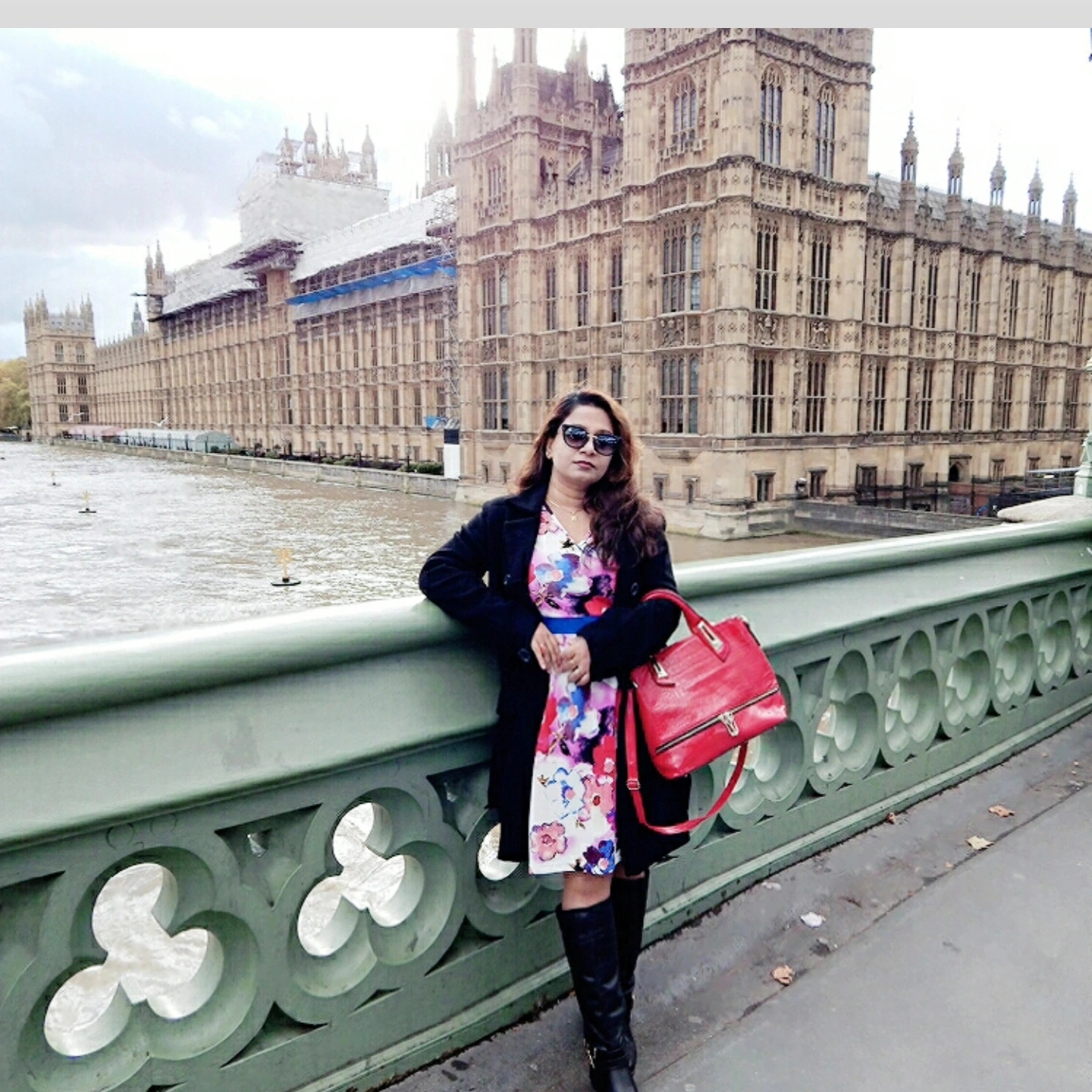
Mowmita Sur is an acclaimed educationist, centre leadership head, author, poet, and social journalist distinguished for her incisive intellect and evocative literary voice. Recognised among India’s top fifty poets, she has garnered national and international acclaim for her meticulously researched and profoundly resonant writings. Her oeuvre encompasses fiction, non-fiction, horror, mystery, and poetry, frequently portraying astute, intrepid, and multidimensional protagonists. As a poet and storyteller, she weaves nuance, emotional profundity, and analytical depth into her work. As an educationist and academic leader, she exemplifies visionary stewardship, pedagogical excellence, and transformative leadership, fostering intellectually enriching and purpose-driven learning environments.




 English
 Afrikaans
 Arabic
 Bengali
 Bulgarian
 Chinese (Simplified)
 Dutch
Dutch Filipino
 Finnish
 French
 German
 Greek
Greek Hausa
Hausa Hindi
Hindi Hungarian
 Igbo
Igbo Italian
 Japanese
 Korean
 Malay
Malay Malayalam
 Polish
 Portuguese
 Punjabi
 Romanian
 Russian
 Serbian
 Slovak
 Spanish
 Swahili
 Ukrainian
 Urdu
Urdu Yoruba