
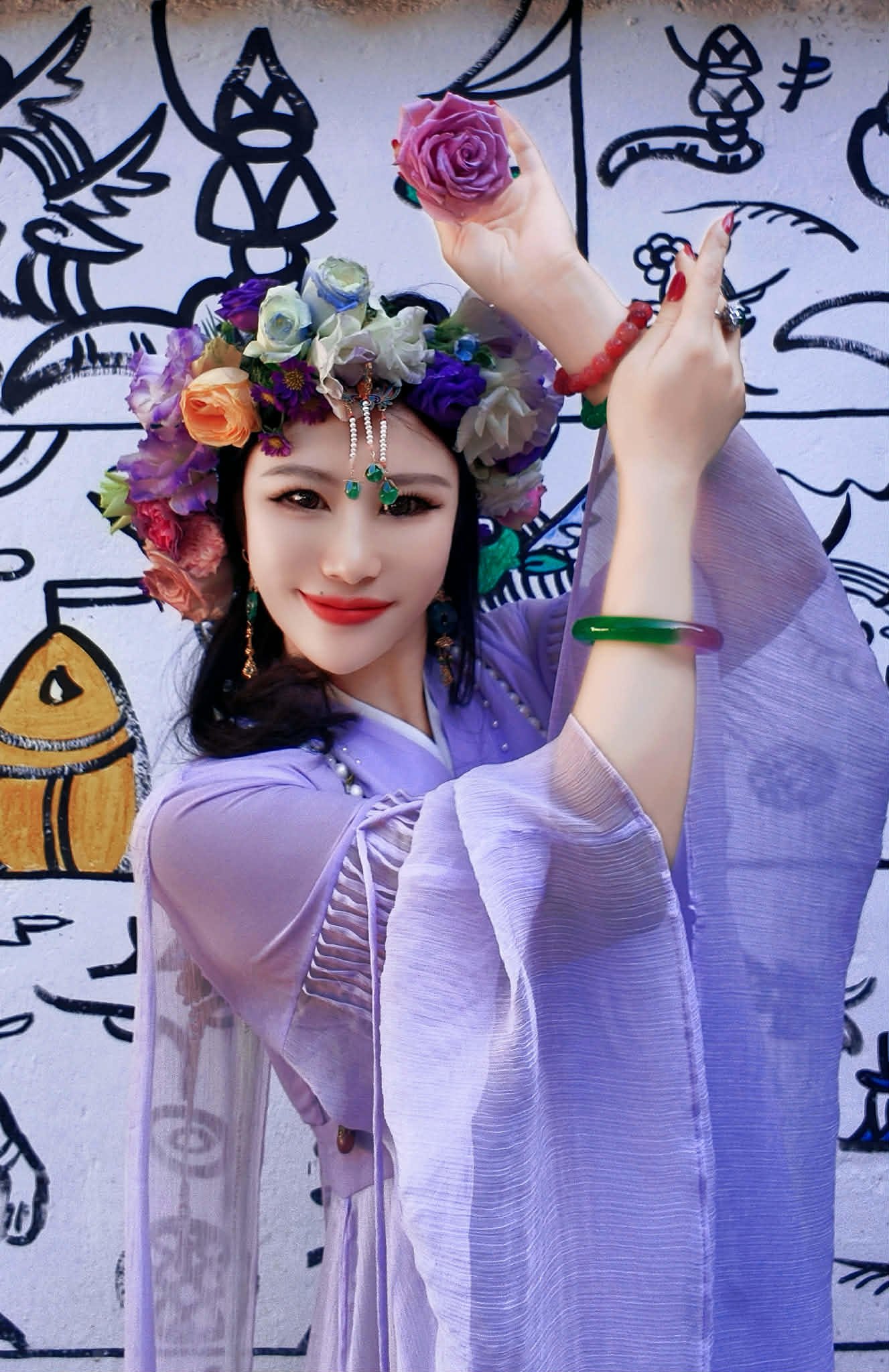
Internationally renowned writer and poet, the only female inheritor of the World Memory Heritage Dongba Culture, Dean of the Yulong Wenbi Dongba Culture Academy of China, Winner of International Literary Awards

As a World Memory Heritage accredited by UNESCO, Dongba Culture is a millennia-old cultural crystallization of China’s Naxi people. Centered on the world’s only surviving living hieroglyphs, it encompasses profound connotations including rituals, epics, art and cosmology, yet this precious civilization now faces an unprecedented existential crisis.
Over the years I have devoted myself to inheriting Dongba Culture, I have witnessed firsthand its critical state on the verge of being lost: there are only a few dozen inheritors worldwide who truly master the complete spectrum of Dongba skills, most of whom are advanced in years.
As veteran Dongba masters pass away one after another, the complete rituals of ancient ceremonies and the exclusive expertise to interpret Dongba scriptures are perishing along with them permanently. The age-old ancestral rule of Dongba Culture that "skills are passed only to males within the clan, not to females or outsiders" has further hindered the cultivation and continuation of inheritors. Without timely salvage protection and inheritance efforts, this treasure embodying the wisdom of early human civilization may completely fade into the annals of history within decades.

In this desperate predicament, the perseverance of dedicated inheritors has lit a beacon of hope for Dongba Culture, and the guide of this light is my master—Mr. Aheng Dongta, the 17th-generation inheritor of Dongba Culture. More than just a core inheritor of Dongba Culture, Mr. Aheng Dongta also serves as a UNESCO Dongba Culture Consultant and Honorary Dean of Yulong Wenbi Dongba Culture Academy. Having committed decades to the inheritance of Dongba Culture, he has devoted his entire life to safeguarding and sustaining this ancient civilization.

He resolutely broke the millennium-old taboo of "passing skills only to males within the clan, not to females or outsiders", making me, a Han Chinese writer, the first female inheritor in the history of Dongba Culture. He imparted all core skills handed down secretly within his family for generations without reservation, including the recognition of Dongba hieroglyphs, interpretation of scriptures, ritual protocols and traditional chants. This groundbreaking act and sense of responsibility have opened a brand-new door for the endangered Dongba Culture’s inheritance.

Determined to bring Dongba Culture to the world, I co-founded the non-profit Yulong Wenbi Dongba Culture Academy together with philanthropist Mr. Wan Yilong. I took the lead in collating rare Dongba ancient texts, spent three years conducting in-depth research, polishing annotations, and translated the three great Dongba epics into a trilingual annotated edition with hieroglyphs, Chinese and English, enabling these so-called "celestial scriptures" to transcend language barriers. Meanwhile, I was interviewed by Italian writers and authored the monograph Decoding Dongba Culture, promoting this ancient civilization to the globe through diverse approaches.
While solidifying domestic inheritance, I have also strived to advance the international dissemination of Dongba Culture. I have presented this ancient civilization at the UN Chinese Language Day, held cultural exhibitions across multiple European countries, and established in-depth collaborations with numerous international universities, enabling Dongba Culture to step onto the stage of international cultural exchanges.

Today, through the innovative practices of Yulong Wenbi Dongba Culture Academy, Dongba Culture not only firmly upholds its core essence of "all things have spirits and coexist harmoniously" but also integrates into modern life and engages with world civilizations with an open and inclusive attitude. This precious civilization, which has been vigorously safeguarded on the brink of extinction, is regaining vigorous vitality on the international stage through the perseverance and innovation of generations of inheritors, continuously writing a new chapter of cross-temporal dialogue between civilizations.




 English
 Afrikaans
 Arabic
 Bengali
 Bulgarian
 Chinese (Simplified)
 Dutch
Dutch Filipino
 Finnish
 French
 German
 Greek
Greek Hausa
Hausa Hindi
Hindi Hungarian
 Igbo
Igbo Italian
 Japanese
 Korean
 Malay
Malay Malayalam
 Polish
 Portuguese
 Punjabi
 Romanian
 Russian
 Serbian
 Slovak
 Spanish
 Swahili
 Ukrainian
 Urdu
Urdu Yoruba