
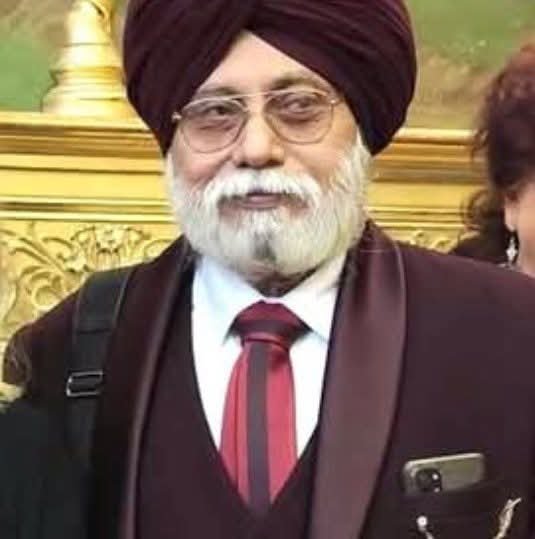
It may look not only strange but outrageous even to think that machines can be innocent, and far less, emblems of detachment. It is an attempt to ascribe metaphysical aura to objects which are by-products of human intellect based on mathematic precision and rational rigour. I am trying to find out a point where the artificial, the physical and the metaphysical intersect. - Anand
Innocence used to be a prized possession of mankind from the day Adam and Eve were brought to life, and made to stay in Eden. The proverb ‘Ignorance is Bliss’ needs to be rephrased as ‘Innocence is Bliss’ because innocence and ignorance aremutually antagonistic. Innocence is a universally desirablestate of original intelligence, whereas ignorance is a state in which man defies original intelligence. The innocent perform their duties for which they are detailed, while the ignorant are the smart lot who try to bypass them, or pass on to others by excessive use of their knowledge and understanding of the systems.
The state of innocence was disturbing for Satan, because these people could not be induced to fall in his trap. So, he planned to destroy their innocence, and tempted them to go for the fruit of knowledge. Knowledge was Satan’s bet, in which he succeeded, and today we have a sprawling civilization, based on knowledge. But, we also know, everything is not well with our civilization. We have lost the state of bliss in which Adam and Eve lived. This earth was a poor recompense for the loss. Once here, we used our knowledge to create a mechanical civilization, which has all the joys, except bliss, the preserve of innocence.
The Problem with Knowledge
Knowledge has made men highly intelligent, and self-centred, as a result of which, they have amassed wealth, but lost the joy of living. If we compare men with animals and vegetation, we find the latter in comparative peace, and a state of near-bliss, simply because they have maintained their original intelligence .
Innocence: Original Intelligence
If we say that animals or vegetation are less intelligent than men, we are mistaken. Animals, birds, trees, green fields, winds and waters may lack the powers of speech, talk, conversation, and conspiracy, but they are very particular about their duties. You will never see any of these species bunking their duty. That is why they remain in comparative bliss, while man has lost all the chances of joy, and the only reason behind it is his knowledge, his capability to look back and forth, and his overpowering faith in his own powers. Nature only admits the innocent, not the likes of men, who in their smartness, have turned against nature, risking their own chances of happiness.
Machines as agents of Innocence
While we consider birds, vegetation, animals and winds and waters as innocent, can we look upon man’s invention, the machine, as innocent too and imbued with a metaphysical aura?
We call our civilizationthe age of machines. And we are constantly building on it, inspite of the fact that the best of men are crying hoarse. It is often made out that machines have destroyed the beauty of the countryside. They have made life easier, but at the same time, brought menaces like pollution also. We are living with a strange paradox. The growth of civilization is the result of the machine, but it has taken away our innocence, and our joy.
However, it can be contended that machines are a part of the evolutionary set up of creation. They have come to stay and cannot be wished away. It is not possible to think of life in the absence of machines, which run on electricity. Extending on our success with machines, man has gone further into the realms of innovation, and come up with electronics, and now AI which is considered a threat to human beings.
Machines and the Idea of Detachment
I think machines which include AI also are objects of innocence. They have no sensibility of their own, which could be programmed against mankind. A machine is there to get the feed, process it, and give the result, good or bad, it does not bother. Nor it can be bribed. In a way, they are object lessons in detachment which our religions preach with in high sounding words. I find no better example of detachment than a machine, which is meant to fulfil a function, without thinking whether it is to do it or not. Lord Krishna wanted Arjuna to act in a detached manner, I think this idea has been best articulated by machines. Machines are there only to help man. And if there is anything good or bad, it belongs to man. If machines are doing good, it is man’s wisdom. And if they are doing bad, here again, it is man’s ultra wisdom.
In conclusion, it can be said that machines represent original intelligence which we call innocence. It may look far-fetched, but I am tempted to call the machines innocent, because they have no evil in their electric blood. Men have much to learn from this mechanical wisdom, - to rise above biases and prejudices, and act dispassionately and with detachment, which the Lord also desires from his men.
Author:
Dr. Jernail Singh Anand, with an opus of 180 plus books, is Laureate of the Seneca, Charter of Morava, Franz Kafka and Maxim Gorky awards. His name adorns the Poets’ Rock in Serbia. His work embodies a rare fusion of creativity, intellect, and moral vision.






 English
 Afrikaans
 Arabic
 Bengali
 Bulgarian
 Chinese (Simplified)
 Dutch
Dutch Filipino
 Finnish
 French
 German
 Greek
Greek Hausa
Hausa Hindi
Hindi Hungarian
 Igbo
Igbo Italian
 Japanese
 Korean
 Malay
Malay Malayalam
 Polish
 Portuguese
 Punjabi
 Romanian
 Russian
 Serbian
 Slovak
 Spanish
 Swahili
 Ukrainian
 Urdu
Urdu Yoruba