
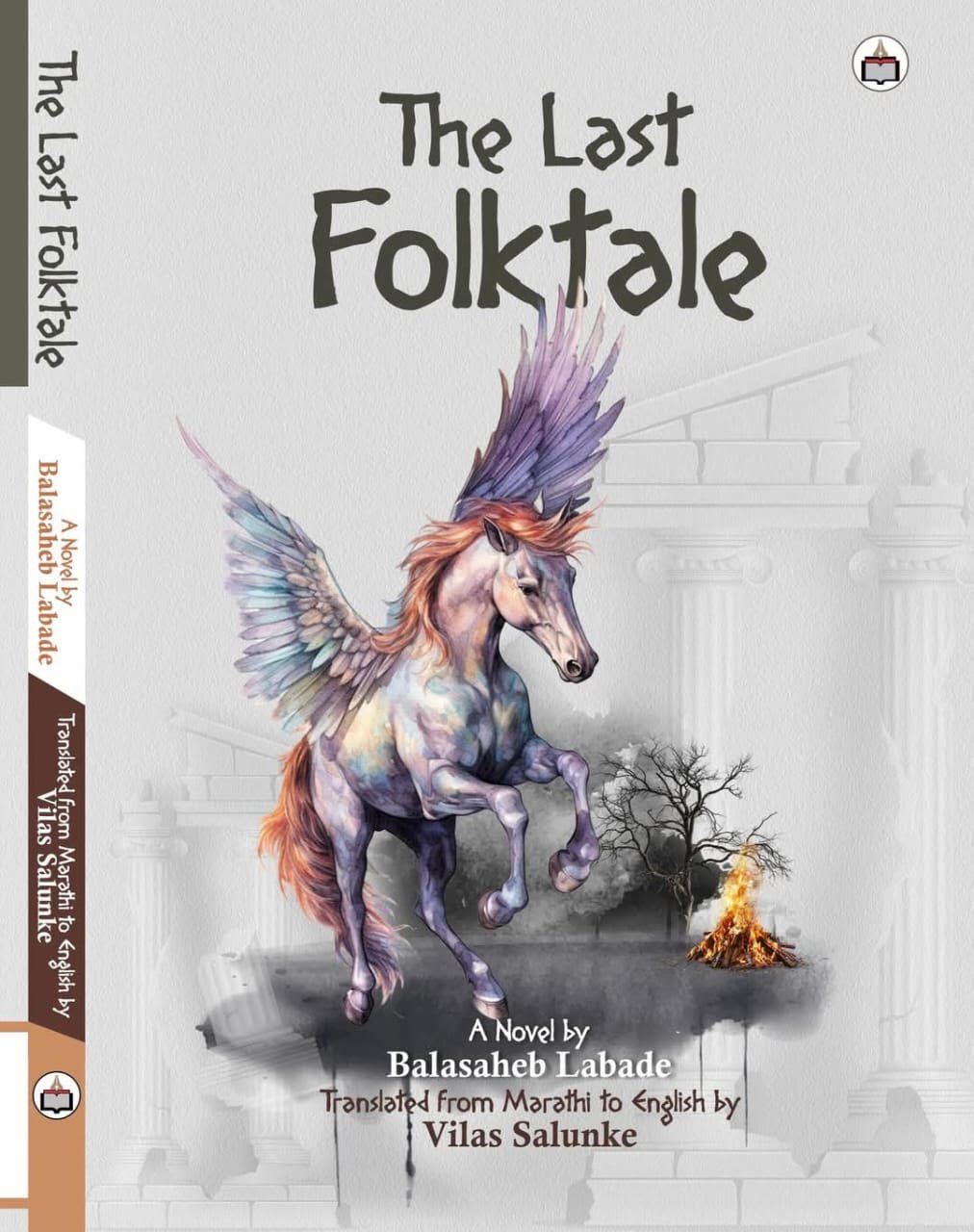
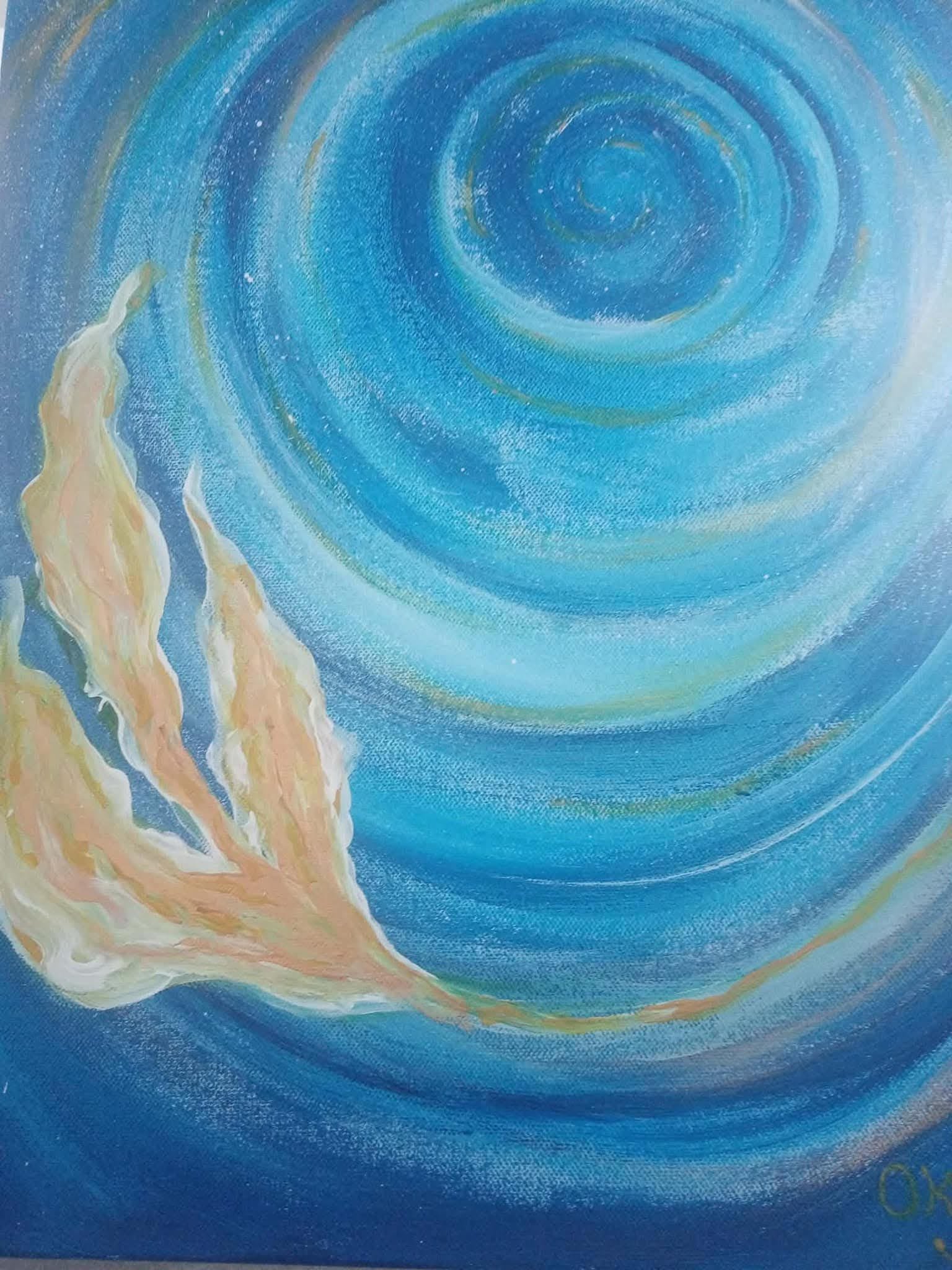
‘The Last Folktale’ by Dr. BalasahebLabade, translated by Dr. Vilas Salunke, [Authorpress, New Delhi, 2025] was first published in Marathi as ShevatachiLaographia in 2022. Dr. Labade is a high trending Marathi poet, lyricist, gazal writer, story teller, novelist, critic, editor and researcher, known for thematic versatility and artistic exuberance, coupled with his passion for experimentation with text delivery. The novel itself is a finished piece of writing, in itself a work of art, like an abstract painting, lending itself to multiple interpretations.
A work of art, whether a novel, a poem, or even a painting, has an autobiographical touch. What you can write, no one else can write. This is the imprint of personality on a work of art. Dr. Labade also admits that he has tried to “give an artistic form to the conflicts and problems in my life, the happiness, and sorrow, pain and suffering fear and compassion” – all form the subtext in this novel.
Art stands between the man and his story. If you subtract art, it is either an article, or history. A writer takes to art when he has to convey things which lie beyond the power of the simple word. Art represents the images, the metaphors, the linguistic devices, which impart a work of art not only beauty, but also an urgency, a sort of suspense, so that the reader sits through the textual experience.
It is here that the artistic excellence steps in. Art is the domain which runs parallel to history, which deals with dry facts, whereas Art drenches the same experience in imagination, and takes us back and forth to highlight those aspects of our ordinary experience, which are not visible to the naked eye which watches life only as a historical progression.
Literature, or for that matter, art is not for the entertainment of the masses only. Films, which are a transformed model of literature, offer unbridled entertainment. But this cannot be expected from literature. Literature should both entertain instruct. So that, while the reader is mesmerised by the artist, he must have something as a takeaway.
In ‘The Last Folktale’, the artistic takes precedence over the thematic, and the aesthete appears to have the last laugh. The novelist tells us that he was at grapple with a twisted reality of our times, which is no more than a meaningless existence. The first task is to give a shape to the weird reality, and then weave a fiction around it, so that it starts radiating messages which can be picked by the readers.. The novelist does not let art stand between the work and the reader, rather makes it delectable with the help of a fairy tale setting, populated by demons which adds to the grip of the story, as well as sharpens the contours of the message the novelist wants to enlarge upon. The magic realism and the absurdist elements of the novel are artistic tools, which help press the message through unwilling minds, by mesmerising them, sending them into a swoon, and then, operating on their consciousness, so that when they return from this journey into the weird, their consciousness is brought to normal. It is just like giving electric shocks to a mental patient, so that his mental derangement is cured. What better could be the function of the crematorium, and the ‘spooky intercourse’? The novel, which is a good example of the fantastic literature, spins a tale with masterly strokes of imagination, which elevates it to a work of epic proportions.

Dr. Jernail Singh Anand
President, International Academy of Ethics.
Laureate of Seneca, Charter of Morava, Franz Kafka and Maxim Gorky Award. [ethicsacademy.co.in]
Email: anandjs55@yahoo.com.


 English
 Afrikaans
 Arabic
 Bengali
 Bulgarian
 Chinese (Simplified)
 Dutch
Dutch Filipino
 Finnish
 French
 German
 Greek
Greek Hausa
Hausa Hindi
Hindi Hungarian
 Igbo
Igbo Italian
 Japanese
 Korean
 Malay
Malay Malayalam
 Polish
 Portuguese
 Punjabi
 Romanian
 Russian
 Serbian
 Slovak
 Spanish
 Swahili
 Ukrainian
 Urdu
Urdu Yoruba